

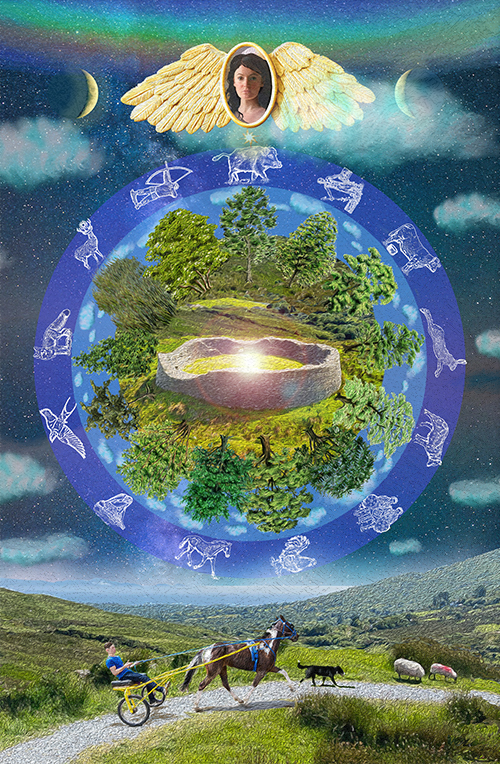
| Place | Painting No. | Date |
| Staigue Fort Castle Cove Co Kerry | “7” | 30/6/21 |
| Spiritual/Esoteric ref | Gaeilge | Etymological Root |
| A place for the learning of celestial knowledge | Cathair na Stéige | The Stone Dwelling of Blocks |
During my time as an artist working in Oberstown detention centre for Children . I found myself painting with the young people from the travelling community who were a delight to work with.
One of the subjects that they love to paint amongst others are the sulky rides that are celebrated on their home-made video casts. A certain sense of excitement is transferred quite easily to the viewer when you look at these. It becomes clear that there is some danger and a great deal of skill involved in managing one of these lightweight chariots, which is what they essentially are. You need to have skill. It’s not a big leap to go from there to what ancient chariots might look like. Through its modern equivalent you can indeed envision more easily stories of ancient warriors who would stand out on the middle beam between the horse and the chariot balancing themselves delicately while at the same time throwing a spear from one hand and holding the reins in the other.
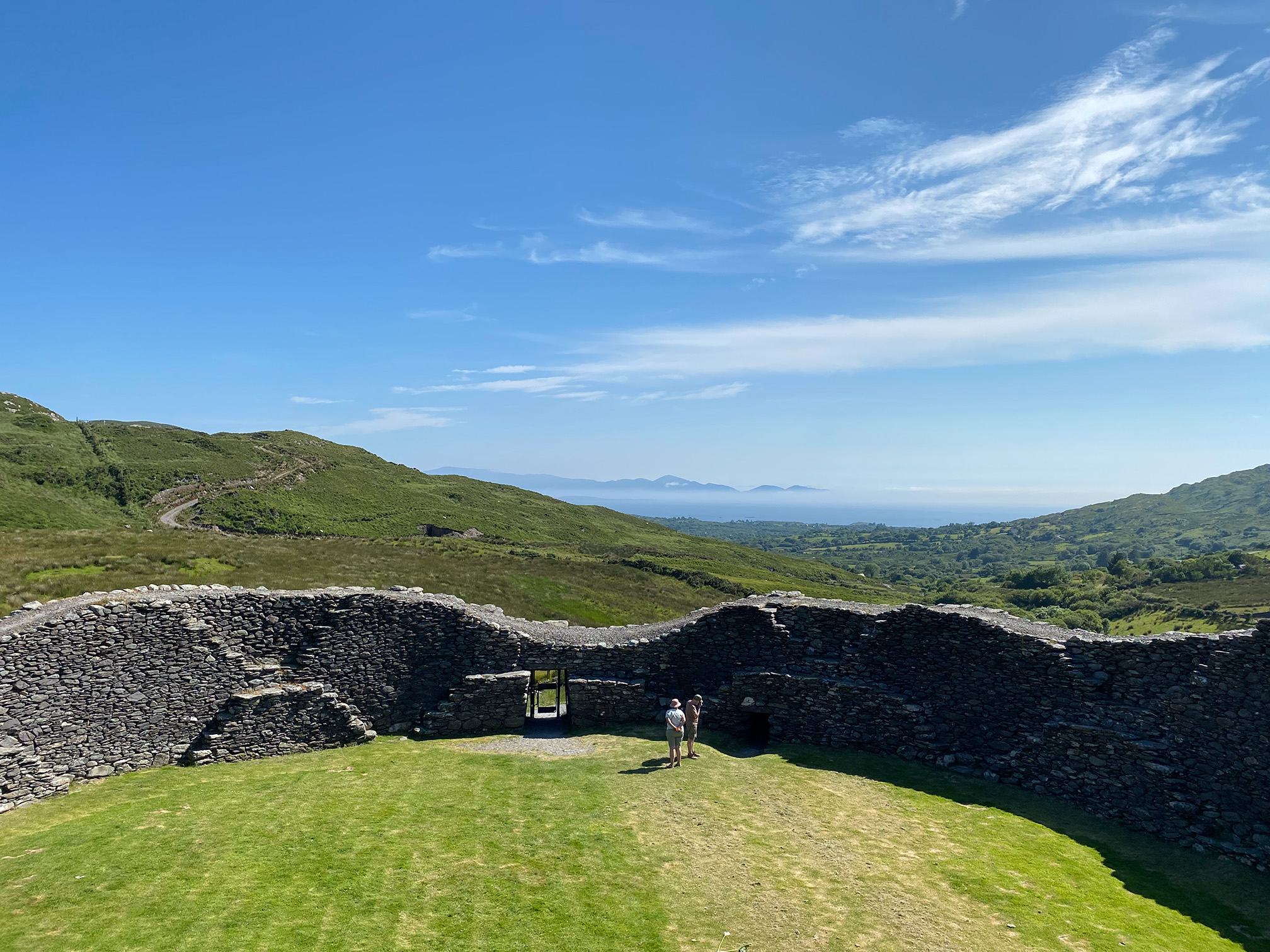
Sometimes two men occupied these rapid lightweight transporters that specialised in hit and run tactics . One of them would be managing the horses which would be a pair in some cases while the other managed the javelins and spears protruding from along the light wall of the chariot. The word Sulky comes from the same English word sulky used for “standoffishness ” Because it was a chariot with only one seat implying that riders wanted to do ride alone.
The Travellers hold on to numerous older traditions . For example They have their own language called Shelta, The Cant the Gammon or Tarri. Old Shelta seems to be more Gaelic or even welsh looking, I wonder what etymological secrets that language contains? I have often felt that these traditions should be easier accepted into modern Irish society and appreciated much more. They should be celebrated before they are lost completely. The Idea of progress has not lived up to its promises.
The Original Chariot
These Celtic chariots were known in Latin as essedum, in Irish they are called Carbad or Carbat . A note aside here from Alexander’s mcbains dictionary :
“carbad = a chariot, so Ir., O. Ir. carpat, W. cerbyd, O. Br. cerpit, Gaul. Carpentoracte, Carbantia, *karbanto‑; Lat. corbis, a basket; Norse hrip, pannier for peats on horse‑back. Lat. carpentum (Eng. carpenter, etc.), seems borrowed from Gaulish. The root idea is “wicker”, referring to the basket character of the body of these chariots”.
It’s also a word used for “carbad a bheil” to describe the jawbone . Literally… the chariot of the mouth. The Jaw is called this because it resembles the design of the old wicker chariots . So the weapons would be arranged like teeth sticking out of the jawbone on a chariot . So if you were in the line of fire you could view it as being a potential victim of the jaws of death.
The language tells you what these old chariots were made of. Mc Bain’s is a simple online resource I can find for the etymology of Irish Gaelic. It is used for that, despite being written for Scots Gaelic and though it is mostly consistent with Irish etymology it’s the only show in town there. I am not a fluent speaker myself so I am still learning. However the eDIL (electronic Dictionary of Irish ) is also very comprehensive and gives many clues as to etymology, meanings and origins. I have yet to discover if it is regarded as an authoritative etymological dictionary of Irish also, I don’t think it is. Correct me if I am wrong.
Looking at these videos of a sulky riding down a country road or on show at the Ballinasloe Fair allows you to picture what a first battle assault looked and felt like. These chariots had to be lightweight. They had to be easy to manage and they had to be very fast and, as already related to in the story of Eamhain Mhaca, before the chariots proceeded to race against her (she was on foot)…. for this mythological race, the king made sure that his chariot was emptied and peeled of any extra weight so that it would run faster. (See The Eamhain Mhaca Link (soon) )
It’s a great insight to me to visualise the modern day traveller in Kerry scooting in a sulky race accompanied by cars. You would wonder how an earth the horse does not skid off the road and lose control while carrying the rider behind.
When you see these riders with their legs on the metal stirrups of the Sulky with their hands on the reins with hardly anything of a seat under them it is impressive a display. The Travellers hold on to their origins as tightly as they hold on to the reins of their horses . Despite the fact that these events have happened in the past on public roads according to modern laws which is no longer the case as they can be a little frightening to those unfamiliar with it if you happen to be driving by yourself and come across this unofficial cortege of mixed traffic .
I cannot understand why there cannot be some compromise reached and sulky racing embraced legally. I know there are displays in Ballinasloe which I have not yet seen . It is a sport that should be promoted and given its own arena that celebrates Irelands Celtic and Traveller past. It certainly would be a great asset in those surroundings as a tourist draw and income earner for the Travelling community and for various affiliated suppliers in the same way as harness racing is promoted in many countries abroad especially America. However I would admit I know very little about horses and racing so please keep that in mind if you find it to be an unrealistic suggestion. Feel free to comment yourself on the subject below.
Staigue Fort City?
When I came up to Staigue fort I could envision the coming going of numerous chariots in the area. Having thought a lot about its design and seen pictures of it, I found that being there was a surprising experience. First to find this place through the use of the crystal path map. When the lines intersected at such a specific position that I did not know until that moment Staigue Fort existed … and then to finally come upon the place for the first time and see it for real.
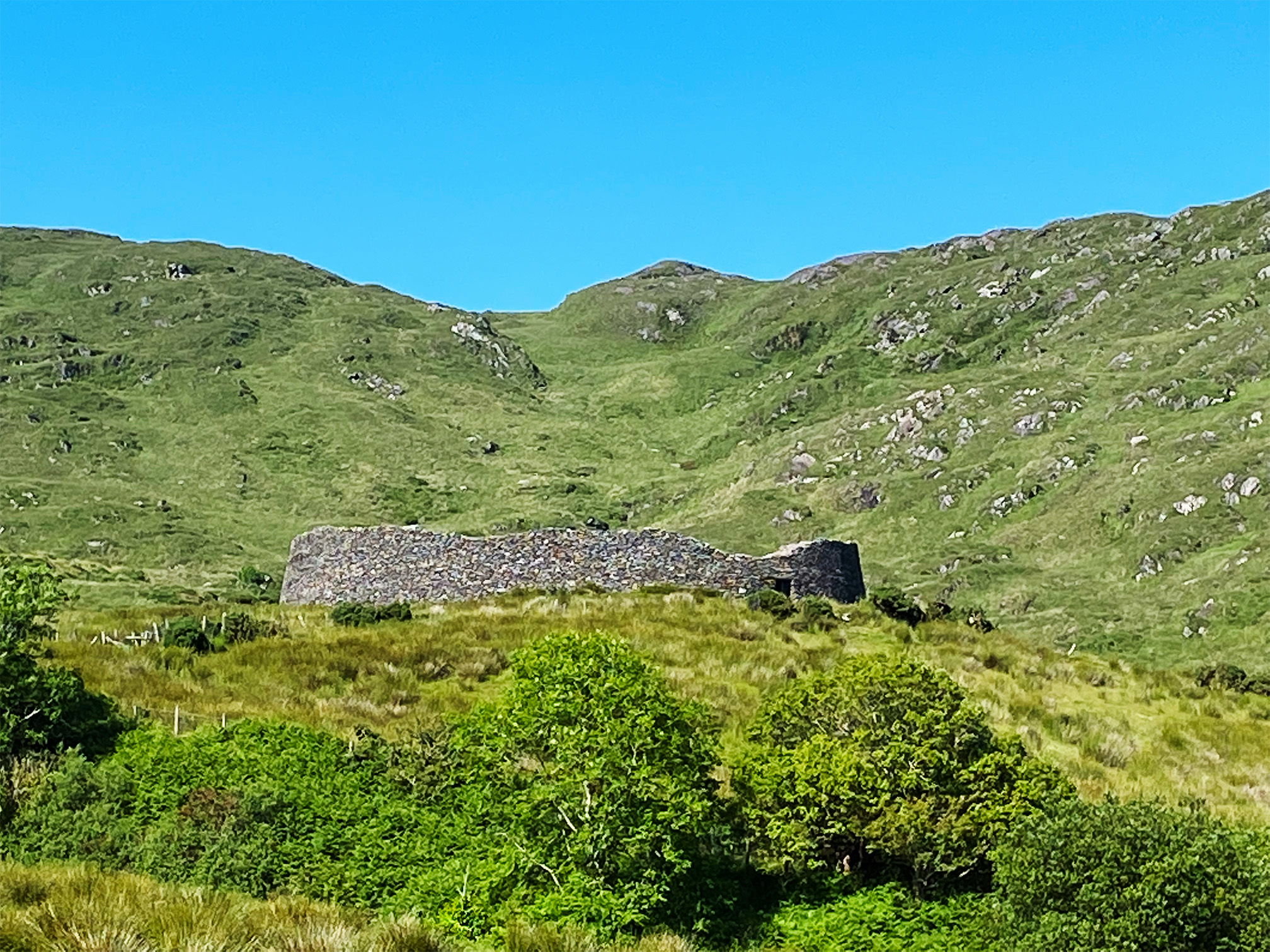
It was not really on the top of a hill as was referred to in tourist literature . It is set into an expansive 3/4 bowl shaped alcove in the hill. The hill then forms a natural, almost complete circular arena around the stone circular fort. This alcove opens out when facing the sea where, in the distance, in line of sight is a small island and beyond that the other mountain peaks across the inlet. The place is situated in Castle Cove which is an English name for it that describes it quite well . The Irish Name for the place is Cathair na Stéige. “Cathair” means City. The nearest I can find for the word Stéige is “chunks” but I am still searching for a meaning there . Perhaps it hides some truth I haven’t understood yet. Cathair in Archeological terms does mean a circular stone fort in one fócloir I looked at. But its real meaning may be found in the interpretation for the word Cathair as a “stone dwelling. “ which may be the Irish description for a city as well as a stone fort. The highly crafted stone walls that do not use mortar are a significant aspects of the building. Another interpretation for the Irish in place names give its meaning as the bleak barren lands? Welcome to the fluid world of Irish language interpretations! It is not a precise science and all the more interesting and beautiful for it.
Is The “Fort” Primarily A Defensive Structure?
A great deal of the structure remains as you enter the central circular area and you can see what was a very symmetrical shape with steps arranged in triangular forms up the walls in ten places. This creates a pattern of X shaped arrangements. There are a couple of chambers in the base of the walls which you can enter and these have corbelled roofing big enough to stand up in, though you have to enter the cells on your knees.
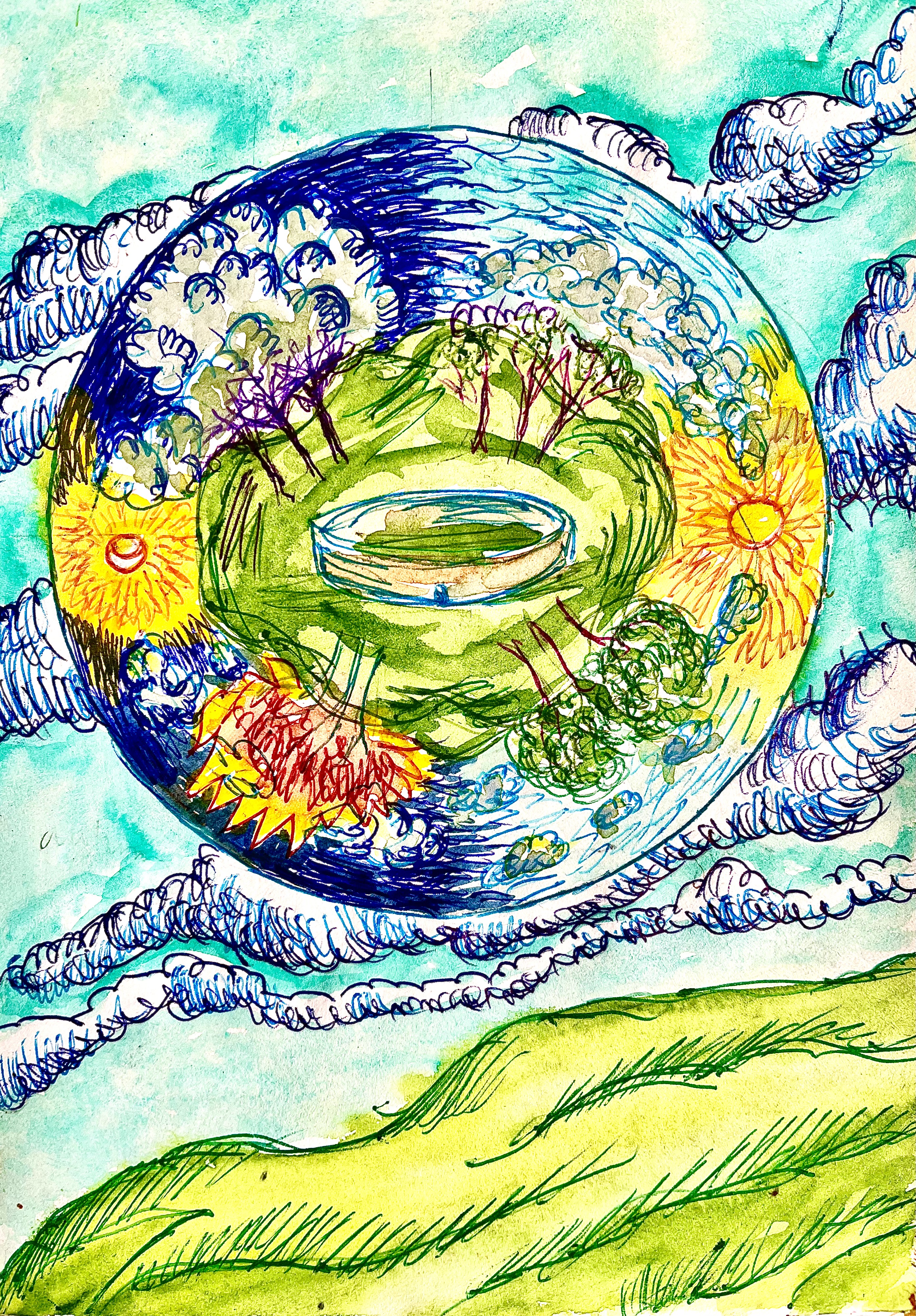
It’s completely obvious to me that this circular building is not a fort at all. Nor was it built at all for that purpose. It is overlooked by higher land ridges as I have described . This would give any enemy invading the “fort”, or putting it under siege, a massive advantage. It’s too unrealistic a prospect to be considered as a serious defensive structure.
This building is patently an observatory for observing the moon, the sun, the planets and the constellations of the night sky. As I entered this area and noticed that there was a very strong relationship between the alignments of the hollow chambers and the opposite walls along the curved watershed of the surrounding hilltops. The main entrance of the fort seems to be aligned with a particular dip in the edge of the opposite rise in fact.
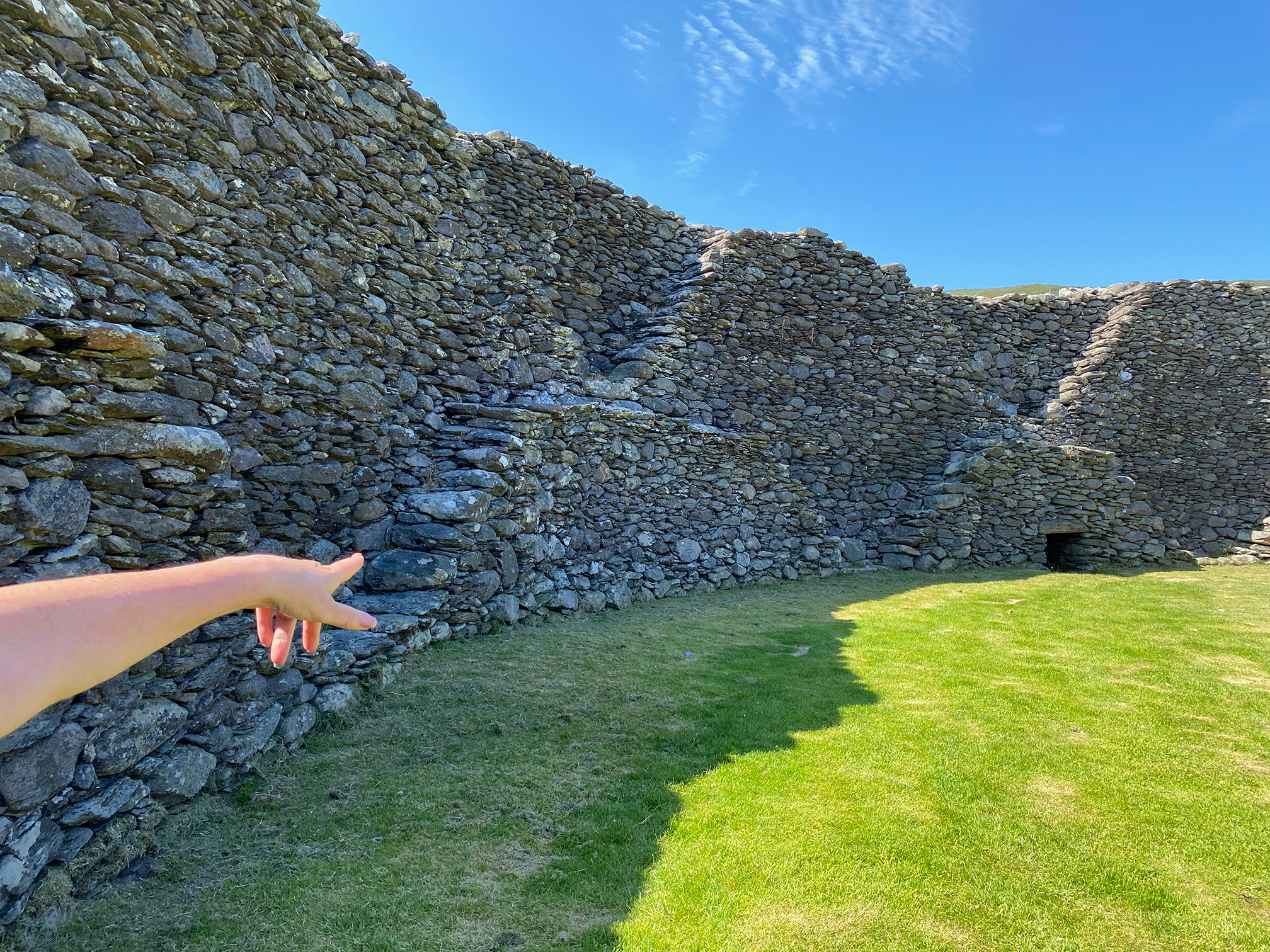
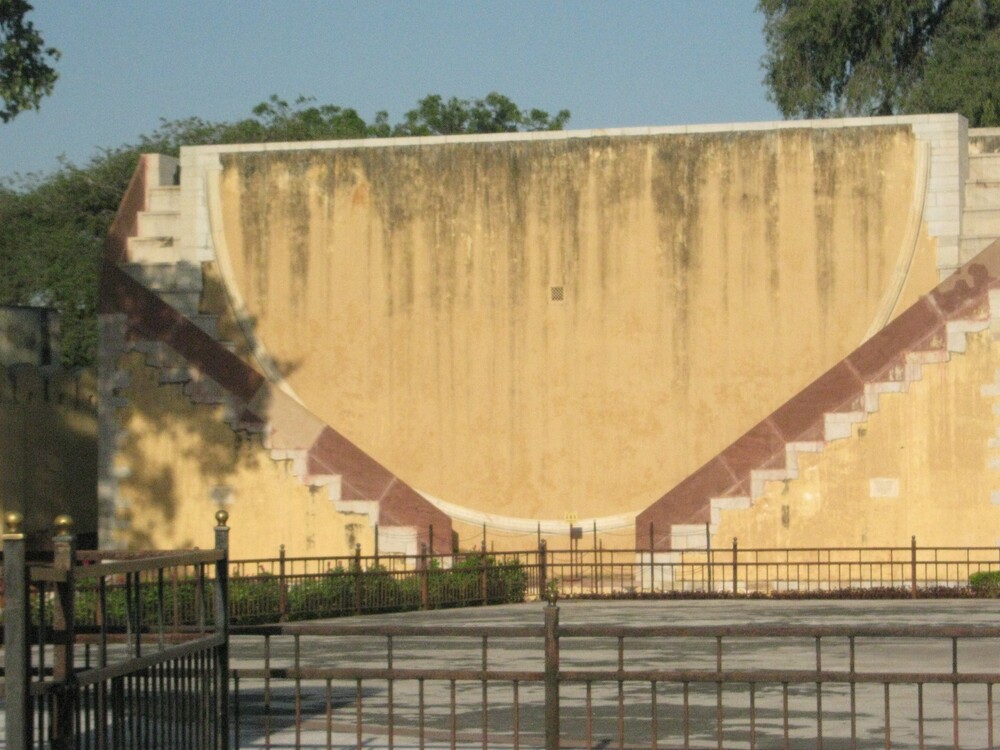
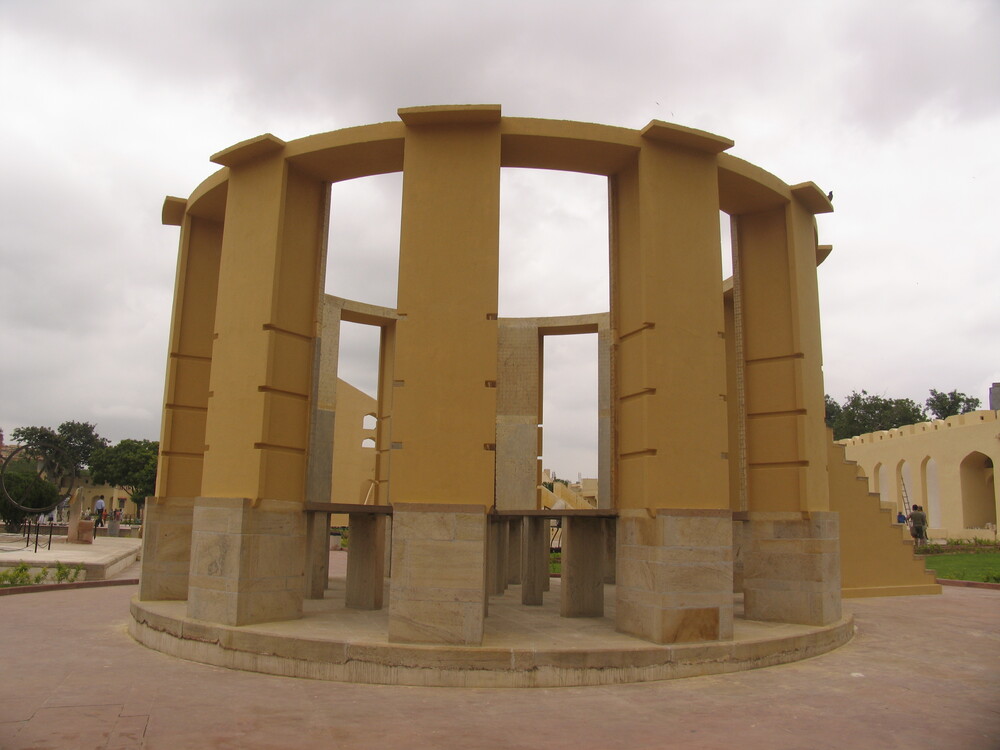
There are also present white quartz rocks in the inner walls in certain places. In such a consistently grey stone construction this would surely be deliberately incorporated into the design. This suggests that these are markers and have some significance though their precise location may have been altered over time during rebuilds . One of the reasons I believe it is an ancient observatory is because of the similar appearance of photos of some structures I have seen images of from India such as The Jantar Mantar in Jaipur and the use of steps there to pin point specific observational angles.
The next surprise you find is that it is a taller structure than any of the photos show it to be. It’s 5.5 metres in height, and the walls lean inwards further increasing the effect of the perspective of scale. This means that the shape which also tapers upwards inside enhance the feeling of being in a shallow bowl. Again this provides a fine edge with which to measure the sky. I would imagine that this site being already in a bowl- like natural hill would have being used as an observatory even before the stone structure was built. Even today the general region is promoted as Kerry dark sky reserve. https://www.kerrydarkskytourism.comWeb resultsKerry International Dark Sky Reserve
But I have come across nobody promoting Staigue fort in this capacity historically speaking, though there is a brief mention of the idea on some notes.
Celestial Observations
Immediately after I arrived into the arena a black sheep dog followed me in. It appeared to be his job to keep the sheep out as he sniffed around for the scent of any animal. He then coyly ran out of the entrance again. Then as I moved around the outside, I sensed I was being followed, I turned around to see a ram and a lamb with it too, close on my heels. They then overtook me around the perimeter.
I could not help think of the symbolism of this in relation to the zodiac, the wheel of the fort being followed by the animals. This seemed to confirm in an intuitive way that staigue fort is actually an observatory. Because the ram reminds one of the constellation of Aries in the wheel of the zodiac. I saw myself as the unlearned fool… as the constellation of Orion being followed into the fort by the sheep dog as in Canus Major (meaning “big dog”), receiving perhaps, like the sites original initiates, an education in ancient knowledge through this ancient geometrical apparatus.
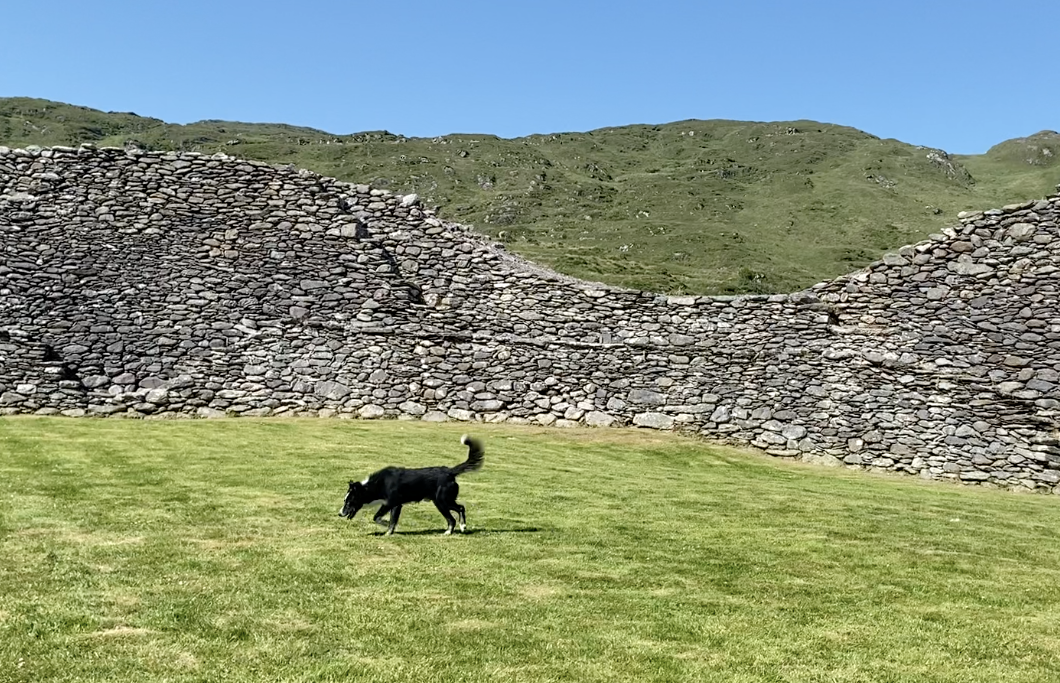
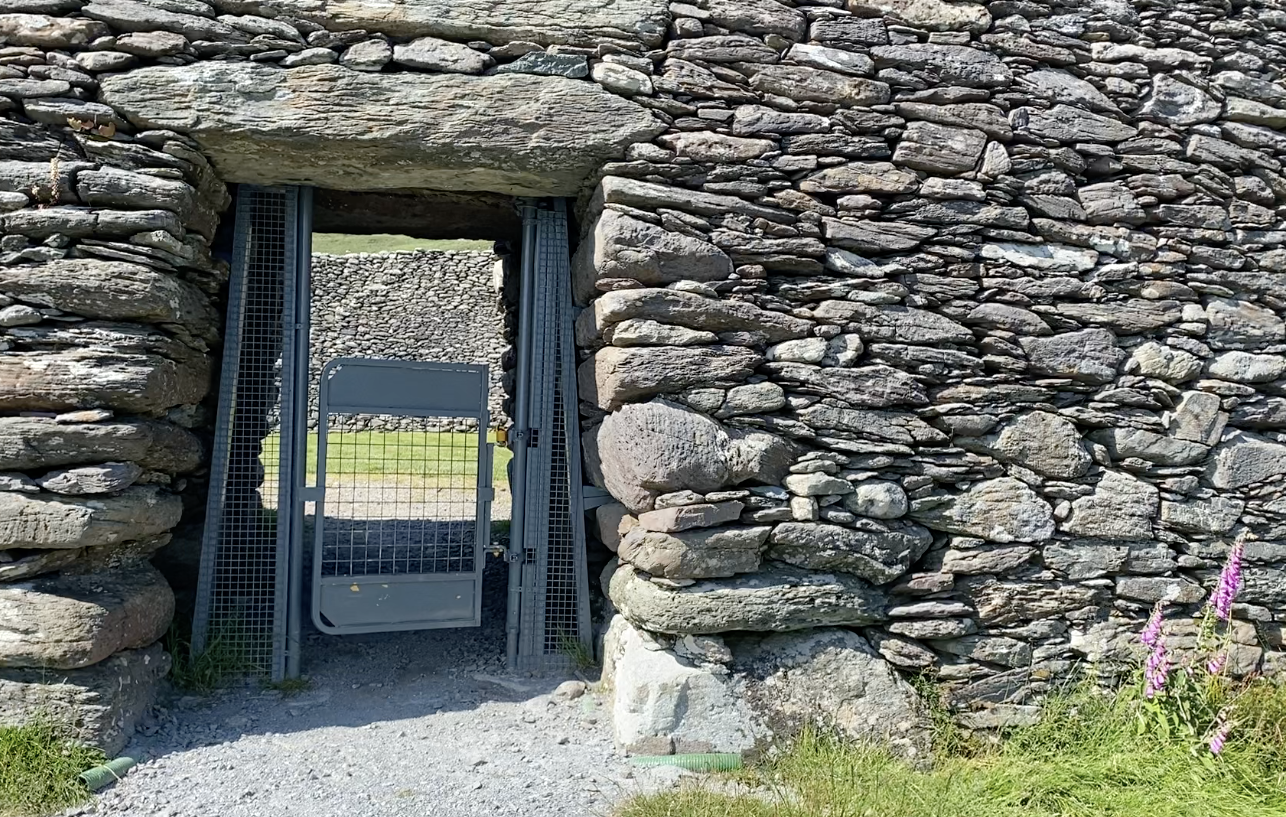
That observation is my intuition at work but practically speaking it cannot be a coincidence that there are access points that are given at equidistant points between the ground and the ramparts via beautifully designed stairwells that when viewed from above in drone footage show a star shaped configuration. These stairwells are divided to bring you to 10 main points around the ramparts giving you perfect access all around. This then, with the lower first tier of steps creates X shaped forms against the inner wall of the rampart. Even the tapered shape of the doorway reminds one of a building for a temple . It looks like a Neolithic style greek temple doorway complete with large stone lintel. What’s very interesting about this comparison is that this style of Greek architecture dates to 7510 BC. This is a date much earlier than the one given to Staigue Fort. This makes me question our dating of the Irish Fort.

The True Purpose of Stone Ring Forts.
There is a tradition for creating other stone forts in this Kerry region. I was soon to learn of the existence of …
- Caherdaniel stone fort,
- Loher Stone fort
- Cahergal,
- Leacanabuaile stone fort,
- Ballynavenooragh stone
From the Ballynavenooragh name I came cross an eytmological interpretation that was to confirm my suspicions about stone ring forts. I will cover this reasoning elsewhere.
But it was at Rathcroghan that I came across the next mention of such observational stone ring places, Caiseal Mhanannán, this means “Manannan’s Fort” referring to Manannán mac Lir. Manannán is the magical master god associated with mists and the sea. He rides his white horse “Aonbarr” that can ride across the surface of the sea as if it was solid land and he can create mists to disappear from sight and reappear in another part of the country. He is strongly associated with the ocean. Near Rathcroghan are the foundation remains of his oval trivallate stone fort. This is described in the mythology as a place of learning. Staigue Fort is certainly such a place , (the fort was built in the Iron Age which is described as being between 1200 B.C. and 600 B.C I have no doubt that there was an earlier structure or man made embankment of some kind there as is most common with these sites.
In the mythology there is a story in relation to Cashelmanannan about the conversion of two daughters of King Laoghaire of Tara, Eithne and Fidelma by St. Patrick. In it the two princesses were being educated at the druidic school, which was thought to be Cashelmanannan. It’s a sad story because after Patrick baptised them at the nearby Ogulla Well, they died. Knowing about the many stories of manannan throughout different ancient writings that come down to us in medieval manuscripts through oral tradition is important because having the site named after him associates it with magic and druidic practices. Its placement in the landscape tells its own story because it is near the Mucklaghs and Oweynagat . One has to read the landscape where you can see its original origins. Built in the middle between them puts it in the ceremonial pathway between both monuments which could only have magical or spiritual associations because those sites are well known through tradition to be part of a ritual purpose , a purpose that is hidden between the words in the books . I speak about these sites in what I wrote in relation to my visit to Rathcroghan .
But all of the above leaves us with a problem to solve. How did the Celts perceive and identify the night sky? One of the theories about arthurian legends are that they contain a clue as to what the celtic constellations looked like to their teachers the Druids. How did the educated elite view the star formations as they slowly spun across the Kerry sky reserve over Staigue Fort or in Roscommon over Caiseal Mhanannân today?
One idea for that imagery was that Lugh was a primary god representing the red sun, his name in common parlance would have been “Coch Rhi Ben” anglicised to “Cock Robin” – a leftover from the celtic belief that souls were carried by birds after death. The old folk song “Who Killed Cock Robin” alludes to this idea . He is killed by a sparrow with “my bow and arrow”, the sparrow can be read to mean Bran, the heir apparent or second in command to succeed Lugh – the god of winter. And Bran can be read as summer, his successor as manifest in the swallow . Lugh could be seen in the sky as an equivalent of Perseus who slays the Gorgon to save Andromeda who is chained to the rocks in the sea. The tradition of “The wren boys” who gather to call on people and sing songs while dressing in costumes that appear quite Neo-pagan on Stephen’s Day may actually owe their yearly ritual in part to this background. Only the swallow has been replaced by the wren
A Celtic Zodiac of 13 Lunar Stages
‘Boar, giant, and celestial cow we count to the winter.
Hare, wolf and human pair represent the spring.
At rooster, stallion and corn-ear-woman is summer solstice.
Swallow, deer (stag) and archer are the frame of autumn.’
From the above text, which is clearly referring to the night sky, only the human pair (Gemini), the corn-ear-woman (Virgo), and the archer (Sagittarius) are obviously discernible, although the celestial cow may represent Taurus. But noticeably within the sequence we have the appearance of a stag and a wild boar; the stag is associated with the autumn, as Scorpio is, whilst the boar is associated with the winter. In addition, the stag appears in the poem alongside the archer – remembering that Scorpio and Sagittarius are side by side in the Graeco-Roman Zodiac. This perhaps may hint at alternative northern European constellations including a stag and a wild boar; some of these may even be zodiacal.
But what of this lunar based Zodiac ( from Greek zoodiakos, which means “animal wheel” ) with its 13 lunar months rather than the 12 months of the Graeco-Roman inspired classical zodiac. How can we see how the earliest builders of the original Staigue Fort have looked upon the sky? Perhaps one clue would be to look for other versions of ancient zodiacs with 13 sections in them….
Zodiacs that have division other than 12 were easier to find than I expected . Did you know, for instance, that there was a 13th sign in the Graeco-Roman Zodiac that was removed? It was the sign of Ophiuchus, from the greek, meaning “The Serpent Bearer”. It used to be in the house of the dates November 30th to December 17th . Under this system I would be an “Ophiuchian” according to my own birthday and not a Sagittarian. As it happens there is no correlation between the current popular Zodiac and the constellations because they have all changed over time and this is because the original Zodiac used by the Babylonians and a matter concerning the Earth’s axial precession. This means that the sun is like a ticking clock that lags behind a quarter of an hour every year.
Cultural Differences In The Symbolism Of Different Ancient Zodiacs Around The World.
There are many more zodiacal arrangements available to us from different cultures and different periods of the earths History. Their symbols were also different and more representative of their particular culture. Take for instance the Egyptian Dendera zodiac found on the ceiling of the temple there. The description below outlines …
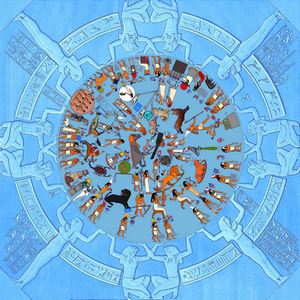
…”Four women and four pairs of falcon-headed figures, arranged 45° from one another, hold up the sky disc, the outermost ring of which features 36 figures representing the 36 asterisms used to track both the 36 forty-minute “hours” that divided the Egyptian night, as well as the 36 ten-day “weeks” (decans) (named because there are ten of them ) of the Egyptian year (with 5 days excluded). The square of the overall sculpture is oriented to the walls of the temple”
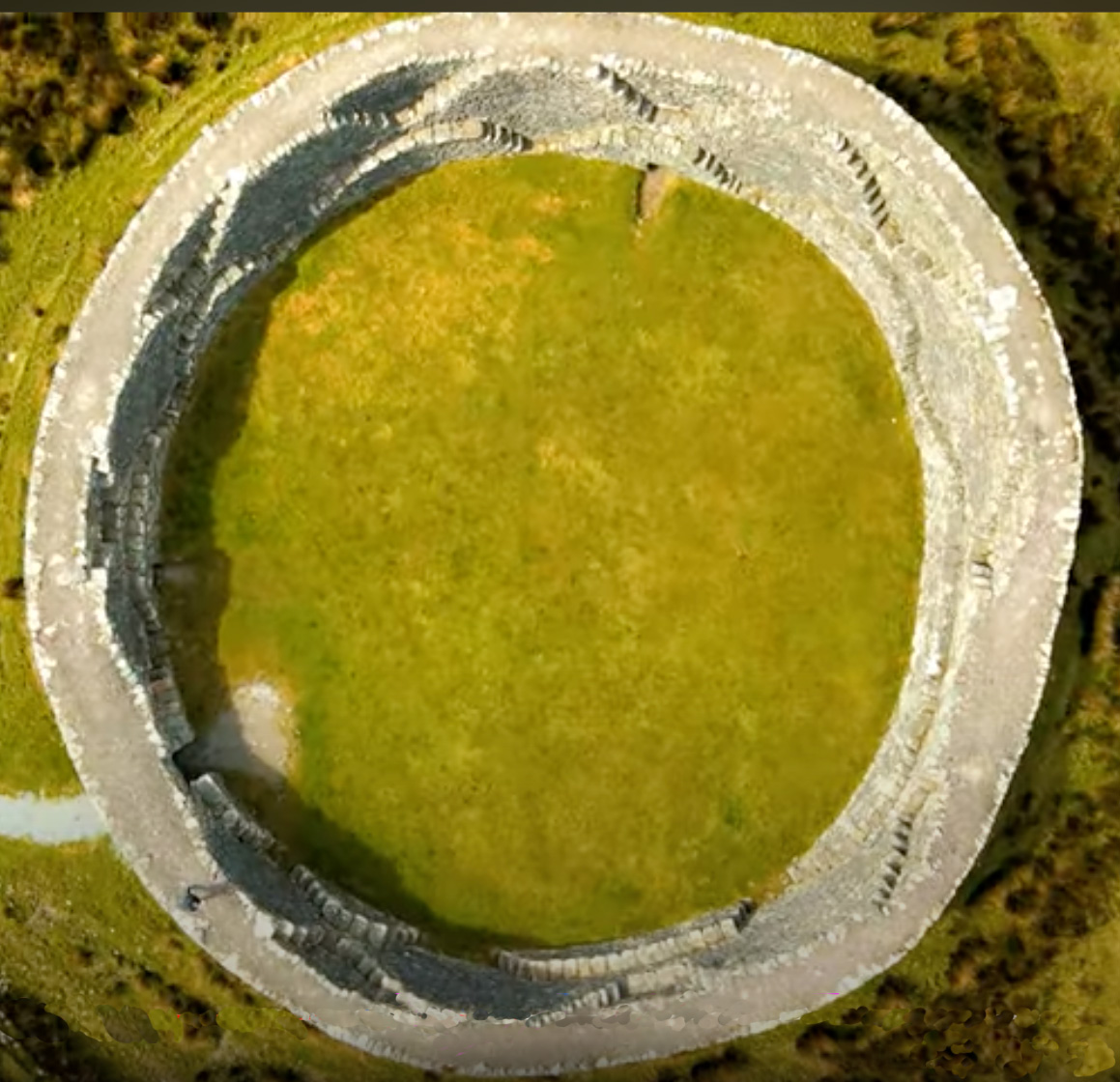
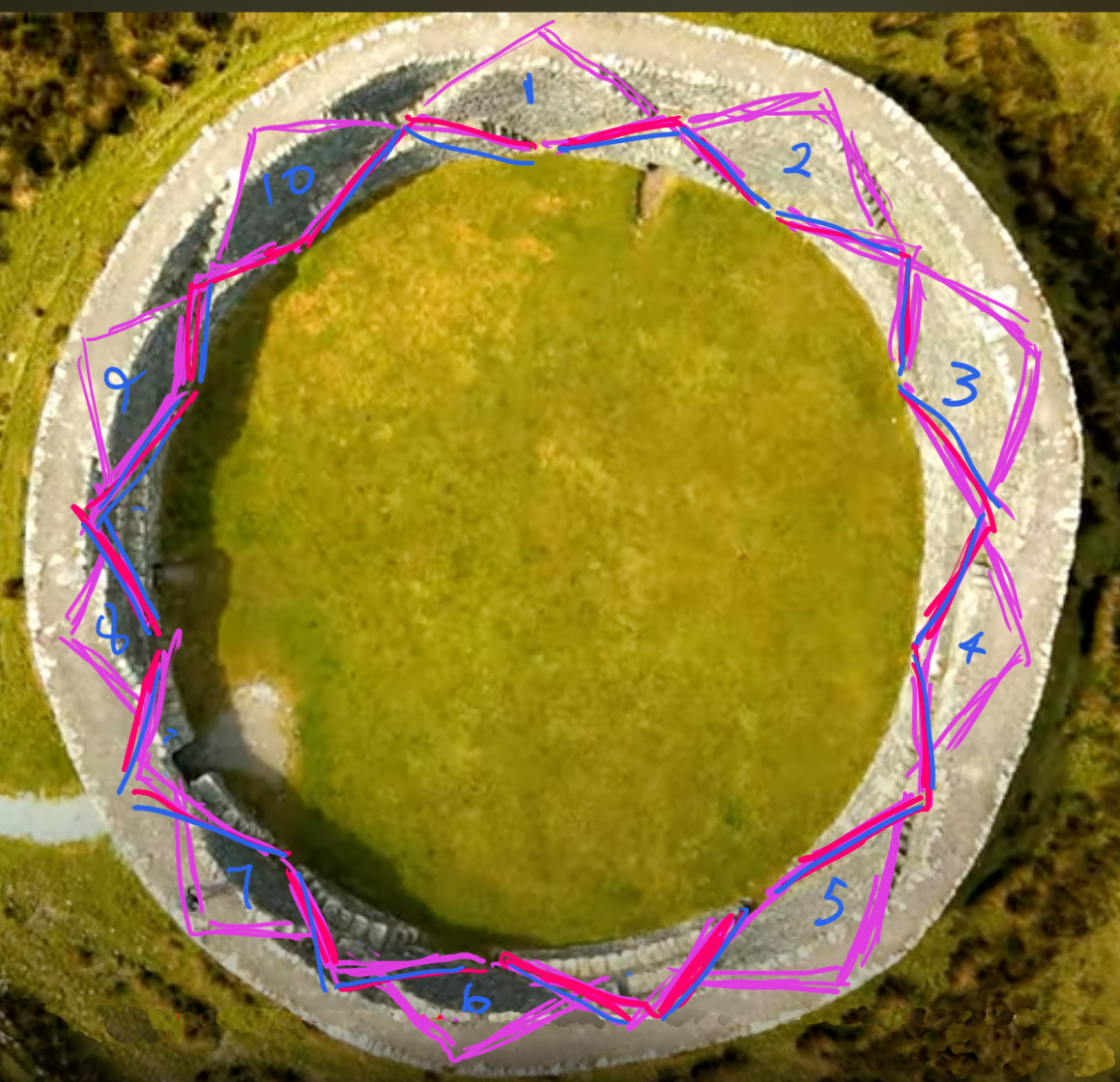
The Dendera disc and its 10 Decans left me wondering was this why Staigue Fort was divided into Ten Sections and was there a link between ancient Egyptian and Irish Celtic knowledge of the constellations? This has come up before.
I am of the notion that that like the Egyptians who included their Gods and mythological figures into their Zodiac that our ancient Irish observers took into account their own worldview too . This expressed that the underworld also truly existed and that it was not simply a version of a Hell vision as it came to be viewed … a kind of spoilt derivitave of the classical image of Hades. No. They saw it as much more. As part of the mechanics of the way the world worked. They believed their ancestors accessed this underworld. It was into this world that the Tuatha Dé Dannan walked through entrances of the mounds that they built before they were defeated by the invading Gaels. They built these rings not to just draw down stellar energies but to also draw telluric energies up. This is why we might view the 10 pointed design of the fort as an energy accumulator.
They were aware of the energy they were drawing up and their ring fort was the place where both heaven and earth energies met and were naturally balanced. The ring fort was a model earth form that unified these energies. As a result all these energies were perfectly observed in that space . This applied to the sea also because one quadrant of the fort looks directly over the sea where tidal movements could be observed too which we are told is caused by the gravitational pull of The moon. Being able to observe the movement of all of the heavenly bodies directly over the seas horizon line would be advantageous also. For instance the first glow of the dawn light is viewed over the sea before it is seen on land .The difference for instance on the day I write this, The 17th of April 2024 , between Nautical Dawn and Sunrise is an hour and a half. So measurements of time and seasons could be made more accurately using the horizon line itself as a point of division well before the days of the Gregorian calendar and digital watches.
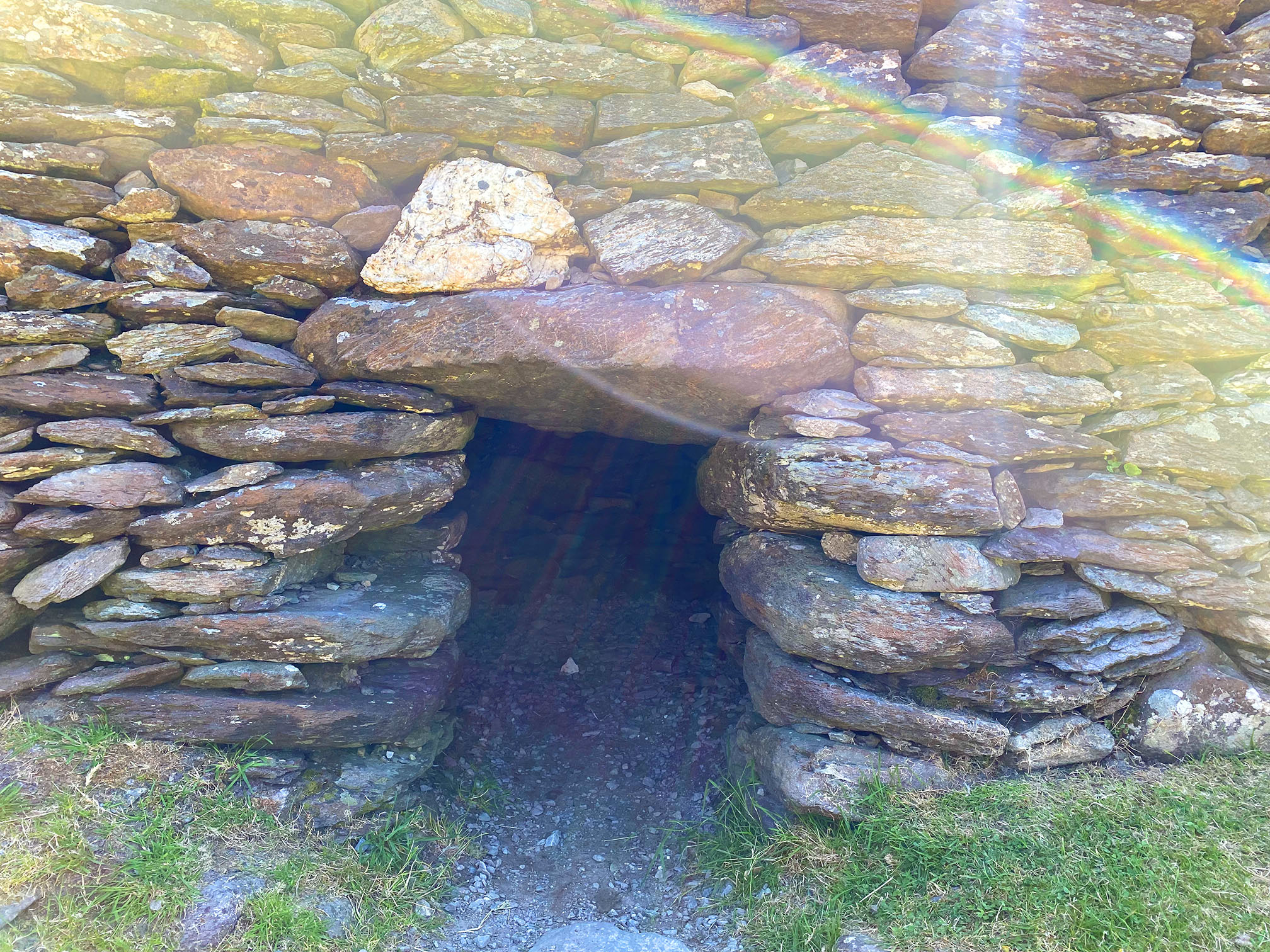
No doubt The little cells in the walls of the fort had the same function we see when looking at the end of passage at Newgrange. These cells would have possibly being useful for specific observations during specific times of the year when the light of the appropriate heavenly body filled that cell. Also in Kerry. the beehive huts at Skellig Michael may have had a similar function for the ancient celtic observer’s early christian counterparts, the monks.
I’ve only visited Staigue Fort once. I wonder what else I will see when I go there again this summer? I feel like a chariot rider myself on this journey… being drawn along by the intuitive horse of enquiry and enterprise.

 THE CRYSTAL PATH